Categories
Uncategorized

Autorotation with Managed Identity

Previously I introduced certificate rotation and why it’s important to running any cloud service. This post will describe some successful high-level concepts to enable a complete secret rotation story using Azure services.

Azure services like Storage or Maps? Invest in Azure AD Managed Identities

Storage is known for the shared secret and shared-access-signature authentication and authorization implementations. For some time now Azure has been consolidating an Azure AD authentication and role-based access control for the APIs.

This solution solves: credential management, rotation, and fine grain access control. Previously you must securely store these secrets in application configuration or secret stores and create processes for updating these secrets and deploying them safely.

Managed Identity creates an Azure AD service principal and abstracts the phrase “Get access token for Storage|Maps|etc” without the cost of certificate management or secret rotation. You can directly assign access on the Azure Storage account or at a higher-level scope such as a resource group or subscription. This works excellent for applications using service to service authentication.

It removes any need for a secret store such as Key Vault. See the picture showing that the application in the Azure VM calls Azure storage using Managed identity from the instance metadata service. There are many SDK choices to use when using the IMDS endpoint to retrieve the access token for a service. Since IMDS is REST endpoint you could even bring your own library. However, I would suggest looking into the recommended and supported SDKs from Microsoft.

MSAL and ADAL are not supported

That’s disappointing right? Good news is the Azure SDK is to be the intended SDK for the replacement of Azure services. There are existing libraries such as the Azure Service Authentication Library which also works too. ASAL library is the current recommendation for service to service authentication to Key Vault but this library can be used for other Azure services too. MSAL is the next recommendation because it is written for the strict focus of authentication with Azure AD instead of Azure Service SDK integration.

For the record

This is the production implementation for accessing Key Vaults and Storage services in Azure Maps. Currently we have been operating with it for about 1.5 years with no live site incidents related to these components.

Azure Resource Manager Template

I’ve authored an example to setup Azure RBAC using an Azure Resource Manager template. The purpose of the quick-start template is to show easy it can be to assign an application access to an Azure Maps account using a Managed Identity or other Service Principal.

The second step to using the quick-start template is to create some Azure resource with a Managed Identity. Check out the Managed Identity documentation on providing a user assigned identity from our quick-start template to a Virtual Machine Resource.

You must reference your created User Assigned Managed Identity and apply it to your resource with a template like:

{
    "apiVersion": "2018-06-01",
    "type": "Microsoft.Compute/virtualMachines",
    "name": "[variables('vmName')]",
    "location": "[resourceGroup().location]",
    "identity": {
        "type": "userAssigned",
        "userAssignedIdentities": {
            "[resourceID('Microsoft.ManagedIdentity/userAssignedIdentities/',variables(''))]": {}
        }
     }
}

One you deploy your code using one of the SDKs mentioned you can call the Azure Maps REST APIs without any need to store the shared key in a Key Vault.

Categories
Uncategorized

What is serious autorotation?

Last post I mentioned how to setup the original TLS certificates in Azure Web Apps. I mentioned this history because it is the common history which most of Azure customers have built web applications. Azure has been busy creating a more secure platform tackling these fundamental problems which every customer experience. This post I’ll introduce what autorotation is.

Autorotation is the complete replacement of certificates in application use without human touch.

It’s the responsibility of the software engineers to setup an engineering system or application workflow to help achieve this.

Why is autorotation important?

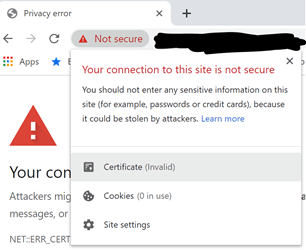
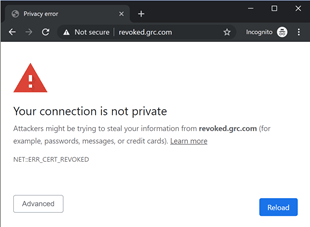
As a junior software engineer or even a consumer you may have seen this type of error when browsing websites.

This is the simplest explanation of how consumer information can be compromised and even your application may be vulnerable to attacks. It reduces the attack vector for any form of public-private key pair using certificates. Rotation every 90 days or more frequently in an automated removes the possibility of an attack to exploit use of a compromised private key + public key pair. If you read more on security StackExchange there is an excellent question about the purpose of rotating TLS certificates.

The main point is to avoid the need of CRL or OSCP to revoke a compromised certificate.

  • Certificate Revocation List (CRL) maintains a list of endpoints for which the certificate should verify if it has been revoked.
  • OSCP protocol is used to communicate to a server to indicate whether the certificate has been revoked.

A CRL check is what makes your browser report an Error and prevent attackers from stealing information:

Before dismissing this as low priority:

Consider no support for Android/Chrome on CRL or OSCP. The argument is that is that in most cases if network connectivity for OSCP is blocked by the attacker the application will soft-fail and still accept the certificate as validate. The only mitigation is to sign the application and prevent any unsigned application from running. This would prevent interception of any network traffic including that of OSCP checks. Additional reading is found on this StackOverflow question. The post will eventually take you to a great explanation of why CRLs and OSCP is a weak form of protection.

The point is:

Short lived certificates are an easy and reliable way to prevent private key extended exposure.

Next week, I’ll go into more details about how a high scale Azure service would implement something like this.

Categories
Uncategorized

Story from the past: TLS Certificate Headache

When I started my career, I had no focus on infrastructure at all. The work in commerce was a typical set of features where I would implement some logic that would help produce an automated solution to electronic signatures for licensing agreements between Microsoft partners and customers. As a software engineer, I did not bother myself with the behind the scenes essentials to run a web service or site because it just did not interest me. Many software engineers try to focus our work on the features which are core to the business and when we encounter this other work such as setting up foundational components we cringe.

I remember days in my commerce team where we worked with service engineers. For those who don’t know what a service engineer is, they typically operate and maintain the online service. I’ve had the pleasure to work with some great service engineers. At the time I was assigned someone who made you feel like you are hand holding an experienced professional through their job. I was working on a new Azure web service responsible to produce and maintain the agreement documents for customers. It was based on a new Azure technology called Azure Web Sites and it was going to make team’s work much easier to produce the solution we needed. It turns out that it was much easier to develop and deploy my code to this platform compared to previous Azure Cloud Services. When the time came for production we had to deploy to multiple regions and introduce a traffic manager for failover situations and simple latency improvements.

Adding this traffic manager created my headache. The service engineer at the time did not understand why the browser would return a big red error saying the web site is not secure but it would be secure when you went to the site directly at WestUsSvc.azurewebsites.net. Well, you can read all about TLS protocols and understand how the server will provide a handshake to your browser but I will save you some time. He needed to provide a certificate with a subject alternate name to support the svc.trafficmanager.net.

This means that we need to provide certificate(s) and set up them up for HTTPS for the service. There are a few options to do this:

  1. Provision a single certificate that supports the union list of these 3 names.
  2. Provision 2 certificates with the region entry plus the traffic manager entry. (Preferred / Recommended)

It was a very odd situation because there was no web site or pages to be viewed in the browser. So, there was no real practical reason to address this issue. However, with anything, I suggest you take it as a teaching opportunity and help the service engineer. I showed him that he must create these certificates and installed them for SSL in the Azure Web Site.

Moral of the story

The moral of the story is that you should involve yourself in the infrastructure even if it’s not pretty or sexy. It keeps the features running and it’s critical to your success. In more recent days we build off these common problems and address a lot of the manual work of managing these problems. I’ll explain in another post how we can get our hands off these manual processes and leverage our wok in the Azure / Microsoft stack. If you are interested in the history of Azure Websites take a look at ScottGu’s blog post from 2015.

Categories
Uncategorized

Telemetry with Identity integration

A balance of information

One recent challenge I have faced has been finding the right fit of metrics and log events to solve the variety of problems we face in monitoring our services. It is a common problem which usually supported by existing metrics and events. Developers and operators can find themselves straddled between request/response and identity. A requirement such as the observation of an account resource with respect to usage of APIs means creating a common correlation. The need to preserve privacy is a fundamental element which should be included in observability. Diligence should be practiced when picking the right platform. Careless implementation can create immense trouble for a product and company.

Experienced observability and telemetry experts often decompose request and response telemetry into 3 availability speeds: Hot, Warm, and Cold. Without diving too much into details:

  • Hot: 5 minutes or less of numerical count-based data with a set of dimensions. These are called metrics.
  • Warm: 15 minutes of an object-based event which may represent state or transaction at the point in time.
  • Cold: 30 days or longer which is often derived from the Warm path and optimized for longer term storage and usage.

These 3 categories can typically make up all parts of observability in a mature product and service.

The common established metrics in the operations of the service might be a latency metric with a set of dimensions.

[latencyMs, OperationResult, OperationName, Region]
[100, "Success", "Search", "East US"]

These dimensions may not include any customer identifying information. Secondly, it is very likely that a request/response event (Warm path) is currently being emitted.

{
	"host": "service.mydomain.com",
	"requestPath": "/api/search/",
	"queryString": "?query=abc%20def",
	"requestHeaders": "Accept: application/json
	Authorization: Bearer xxxxxx",
	"httpMethod": "GET",
	"responseStatusCode": 200,
	"responseHeaders": "…",
	"clientIpAddress": "xxx.xxx.xxx.xxx",
	"responseBody": "{…}",
	"correlationId": "[guid]"
}

This event may capture request path, query strings, http method, headers, response status code, and more. This event is specific to request/response and currently it does not indicate any form of account or identity information either. Headers and query strings might be capturing customer identity information and we will come back to this later to handle this situation. This can be a concern as it relates to privacy and security of a customer’s account.

Understanding the pipeline

Conflating these metrics or events with additional information accommodating the identity needs can cause confusion and lead to the opposite intention. For authentication we typically must execute before any route or individual operation names may be available to our instrumentation code. This can lead to cases where authentication is denied and “OperationName” can result in an empty or null value. There may also be cases where some APIs are made anonymous and do not require any authentication. This may result in a large influx of null or default values for any identity dimensions or fields. This can be exacerbated in cases of supporting multiple authentication protocols and complex authorization policies. In these cases, adding dimensions or properties may distract or mislead the Dev/Ops individual during troubleshooting.

This is a very simplified process view of the pipeline for requests into a service. As you can see if authentication or authorization is denied; the request will not proceed to API for the OperationName or OperationResult. Similarly, we can see how an Anonymous API must contain a default or some placeholder values for anonymous to clear any possible confusion. If we did not provide any placeholder values, we could see cases where the metric dimensions cannot helpfully distinguish identity. I speak about this because we currently face this challenge. We want account information to be made available concisely, but we also want to know if the customer is struggling with problems using our identity implementation.

In our production we have a case where a we support Azure AD Bearer token authentication with the addition of Azure Role Based access control. One of our customers had created a website and had configured everything related to Azure AD App Registrations and was able to successfully authenticate to Azure AD. However, the problem was in the configuration of the access control. When authenticating with Azure AD the OAuth 2.0 bearer token contains an ID for the user or application. This ID was not configured in the access control for the account and resulted in authorization denies. The customer reached out on GitHub and I was able to diagnose the issue with a mix of metrics and logging events. However, this could be a better experience and so I’m currently working on how to make this quicker and easier to identify for us as well as provide the necessary self-service help for customers.

Guidance to a solution

To solve these types of problems I’m approaching it from the point of a view of identity as a contained responsibility. When an software engineer is developing an application, they care about identity as the necessary work to enable the actual business logic. When customers cannot access their accounts or use the APIs it is very important to identify the cause separately with clear error codes and messages.

When a customer receives an authentication deny that means the customer was not identified. We can assume there is a request correlationId on the existing request warm path event. Any identifying request information can be found there including authentication headers or query strings.

What we need is a metric count of authentication denies to quickly identify the cause. Adding a simple trace message event for warm path which can correlate on the same correlationId should give an easy way to troubleshoot the authentication for the given request. The additional metric will be used to aggregate and identify common user errors or potential attacks on the service.

A metric count of authentication success will show the most used authentication scheme(s) such as Azure AD or Shared Key based on the AccountId. The success of authentication is now confirmed, and no additional information should be needed.

A metric count of authorization denies for complex authorization rules. If an account has specific policies such as group membership requirements, SKU based access such as a free and paid, or Role Based Access Control policies then defining a metric like below will be critical for support.

[latencyMS, policy, errorCode, authenicationScheme, accountId]

I recommend enabling any necessary auditing by use of the existing warm path events. If there is a need to add more details to authentication you can extend on this guidance in the places where you insert the metrics. However, with the combination of the new metrics and any existing telemetry there is a good possibility that the data can be exported to cold storage for any necessary auditing.

On privacy

As someone who works on the fundamentals of an Azure service, we value compliance and higher set of goals for security and privacy. Request headers and query strings can add values such as full bearer tokens or symmetric keys. We created a library for header / query string redaction of customer sent parameters. This is critical today and it is necessary to maintain or build the trust of our customers. As an example, there was a case with Facebook which exposed millions of passwords to 20k employees in plain text. As mentioned, there were a series of errors which led to this but as a developer it is our responsible to care about these issues. Redaction could have provided some basic identity protection which may have just stopped this from happening.

For those concerned about losing the ability to troubleshoot authentication while using redaction there are solutions available. I mentioned above the definition of specific error codes to triage the actual issue as one solution. Adding in a short-life warm path event in a contained module may be a necessary work item to solve this problem. The most important thing is to not let the event to be exposed for a long period of time. There should be proper production processes in place to ensure the least amount of people have access to this data.